
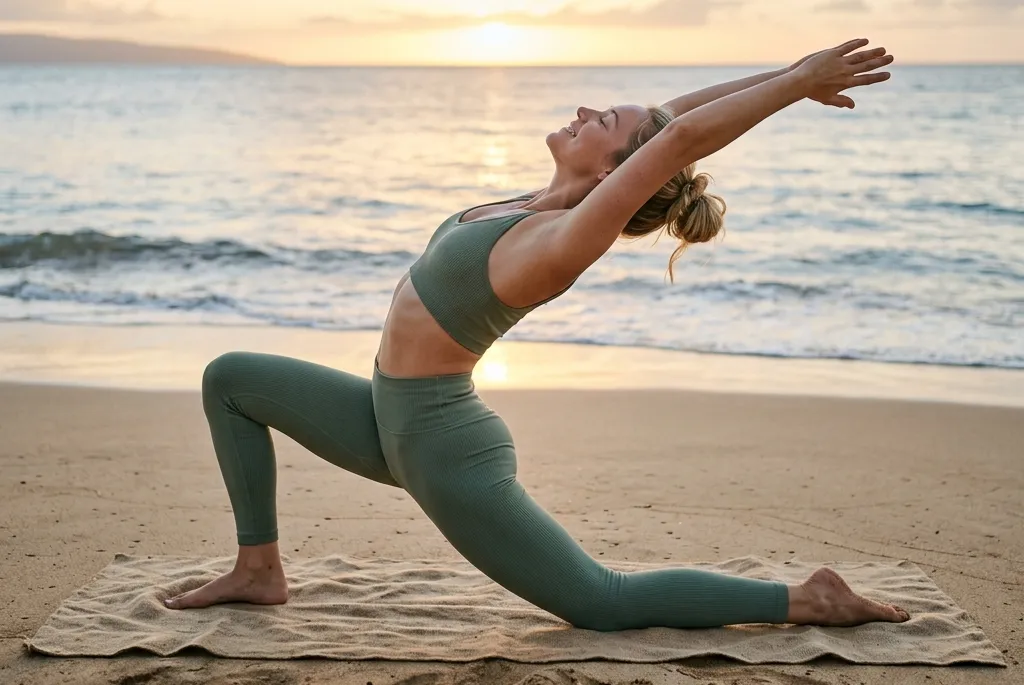
Yoga for Weight Loss
Live, expert-guided classes that build strength, keep you moving, and bring a calmer, more mindful rhythm to everyday life.
Can Yoga Help with Weight Loss?
Yes. At YogShri, live guided classes may support weight management by keeping you active, building strength, easing stress, and encouraging mindful eating. Results vary.
- Keeps You Active
- Active flows keep you moving and raise your heart rate
- Builds Strength
- Standing and core poses build lean, functional strength
- Eases Stress
- Breath and mindfulness help calm stress-driven eating
- Mindful Eating
- Body awareness supports more intentional food choices
Why Students Choose YogShri
Our live classes give you personal attention from certified instructors who can see you and guide your form in real time.
Small groups of 10 to 15 for real focus
You are never just a tile on a screen. Smaller classes mean your instructor can guide your alignment and adapt poses to suit you.
100+ live classes, morning to night
Join a session that fits your day — early morning, lunch break, or evening. Every class is live and interactive, never pre-recorded.
Real-time form correction and feedback
Get clear, practical cues to refine each pose, plus a warm community of students and teachers cheering you on.
A program shaped around you
We start with a one-on-one chat about your goals, energy, and any limitations, then design a practice that grows with you.
Who Can Benefit from Yoga for Weight Loss?
Here is the good news: you do not need to be flexible, fit, or experienced to start. Our instructors tailor every session to your body and to where you are beginning from.
People Who Have Tried Everything
If restrictive diets and punishing workouts never quite stuck, yoga offers a kinder way in — one built around your stress and daily habits, not just the scale.
Anyone Carrying a Lot of Stress
When busy, stressful stretches leave you reaching for comfort food, yoga calming breathwork can help you build steadier ways to unwind.
Complete Beginners
No experience needed. Beginner-friendly classes are approachable yet rewarding, and our instructors offer a modification for every pose.
People with Joint Sensitivity
Low-impact yoga is a joint-friendly way to stay consistently active if high-impact exercise feels uncomfortable.
Busy Parents & Desk Workers
Short, focused sessions you can do at home make it realistic to move your body even on your fullest days.
Anyone Rebuilding a Habit
If long breaks from movement have left you unsure where to start, yoga meets you exactly where you are today.
Active Yoga Poses to Support Weight Loss
These poses keep you moving, build strength across major muscle groups, and pair beautifully with steady breathing. Flow through them or hold each for 5 to 8 breaths.
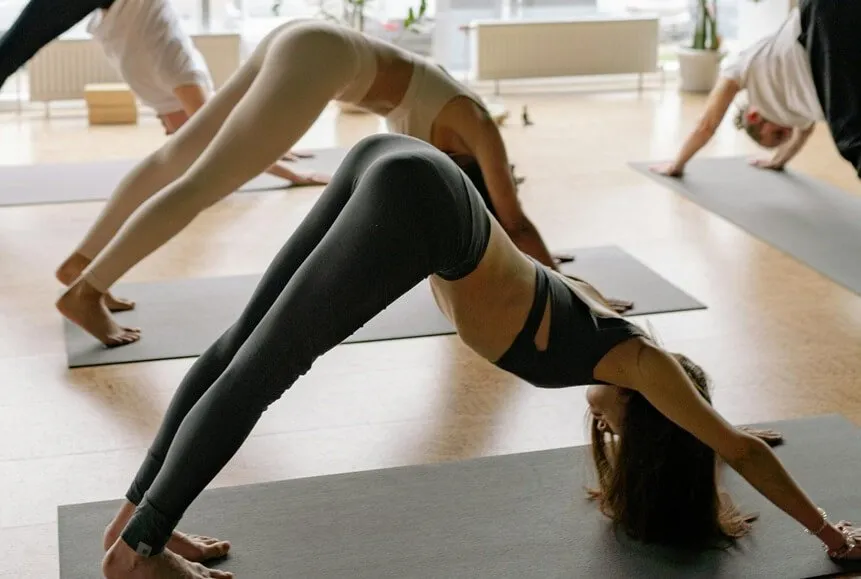
Sun Salutation
A flowing sequence that links breath and movement — the heart of an active yoga practice.
- Begin standing tall in Mountain Pose
- Inhale, sweep your arms overhead
- Exhale, fold forward from the hips
- Step or hop back to a plank
- Lower down, then rise into a soft backbend
- Lift your hips into Downward Dog
- Step forward and rise to stand
- Repeat, linking each movement to a breath
Why it helps: Warms up the whole body, raises your heart rate, and engages nearly every major muscle group. A wonderful way to build stamina over time.
Start Your Free Trial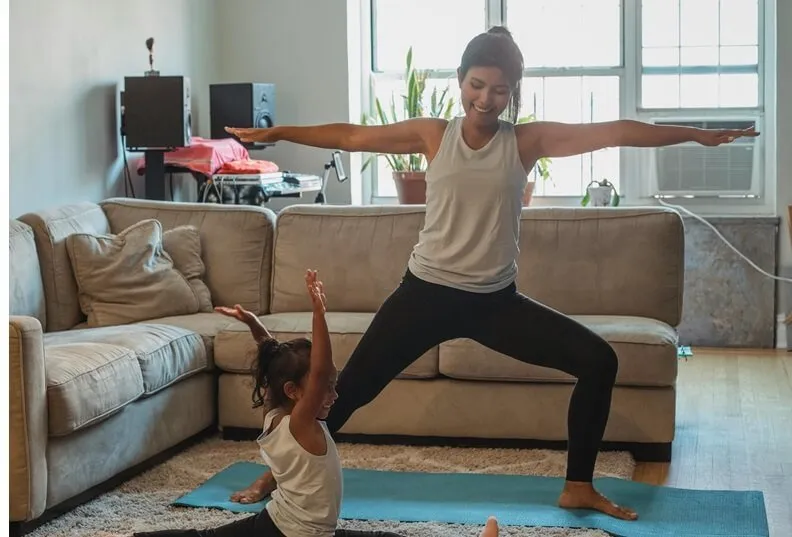
Warrior II
A grounded standing pose that builds strength and stamina in the legs while opening the hips.
- Step your feet wide apart
- Turn your right foot out 90 degrees and left foot slightly in
- Bend your right knee over the ankle, back leg straight
- Reach your arms out parallel to the floor
- Gaze over your front fingertips and breathe
- Repeat on the other side
Why it helps: Works the large muscles of the legs and glutes, helping you feel strong and steady. Holding the pose also builds focus and endurance.
Start Your Free Trial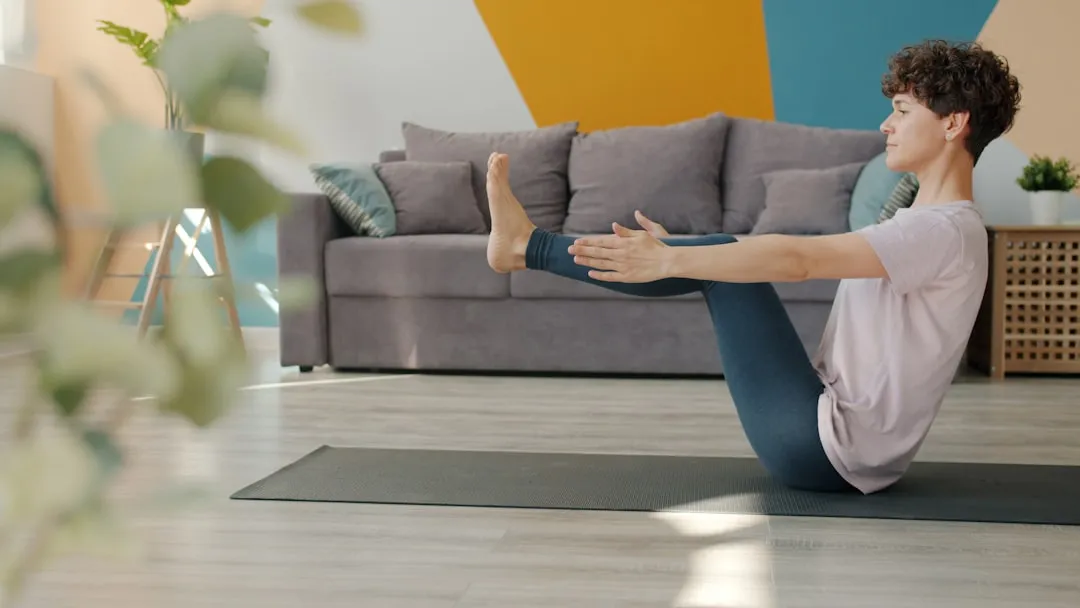
Boat Pose
A balancing pose that fires up the deep muscles of the core.
- Sit with knees bent, feet on the floor
- Lean back slightly and lift your feet
- Straighten your legs toward a V-shape if you can
- Reach your arms forward, parallel to the floor
- Lengthen your spine and breathe steadily
- Lower with control and repeat
Why it helps: Strengthens the abdominal muscles and hip flexors, building the kind of core stability that supports good posture and everyday movement.
Start Your Free Trial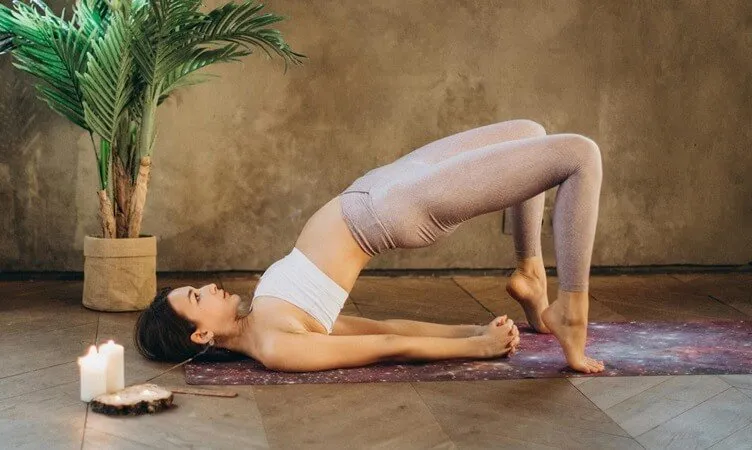
Bridge Pose
A steady backbend that wakes up the glutes and the whole back body.
- Lie on your back, knees bent, feet hip-width
- Press your feet down and lift your hips
- Interlace your hands beneath you
- Roll your shoulders under and lift a little higher
- Hold, breathing evenly
- Lower slowly, one vertebra at a time
Why it helps: Activates the glutes — some of the body largest muscles — and strengthens the back. A lovely counter to long hours of sitting.
Start Your Free Trial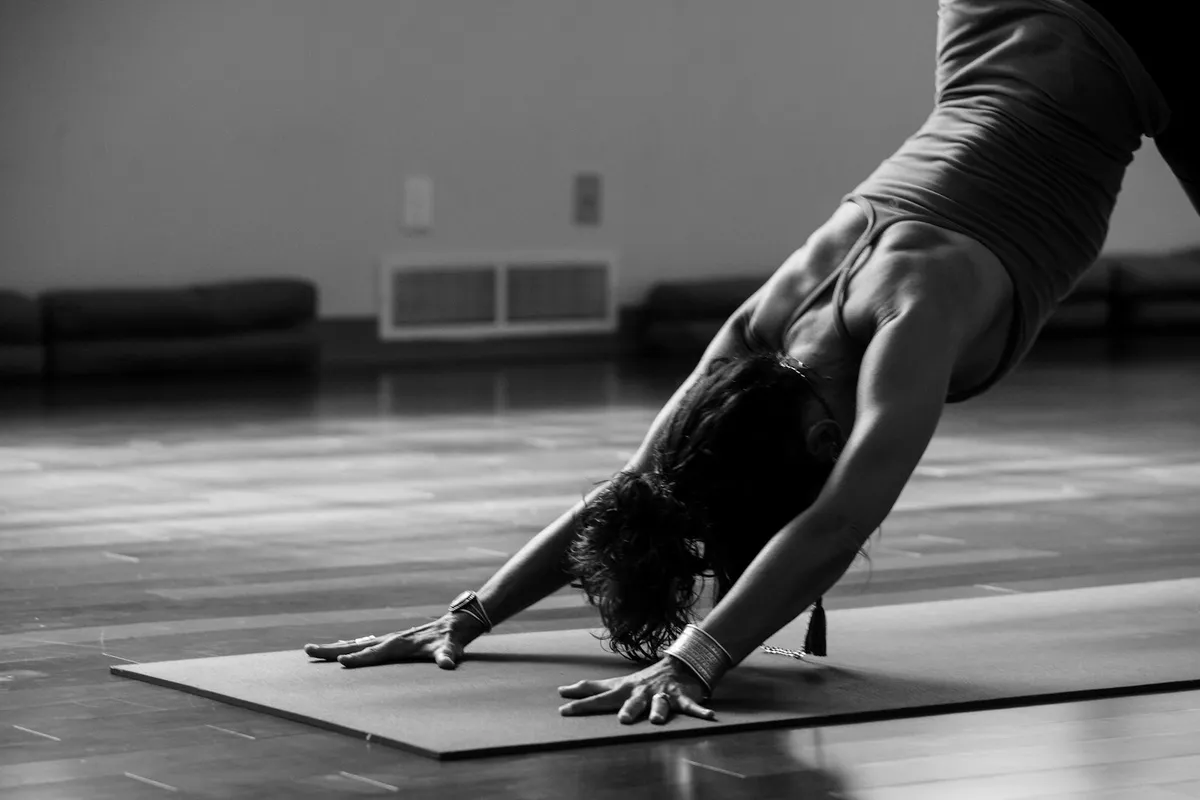
Downward-Facing Dog
A foundational pose that stretches and strengthens the whole body at once.
- Start on your hands and knees
- Tuck your toes and lift your hips up and back
- Straighten your legs as much as feels comfortable
- Press your hands down and lengthen your spine
- Soften your neck and breathe
Why it helps: Builds strength in the arms, shoulders, and legs while lengthening the back of the body. A brief rest and a strengthener rolled into one.
Start Your Free Trial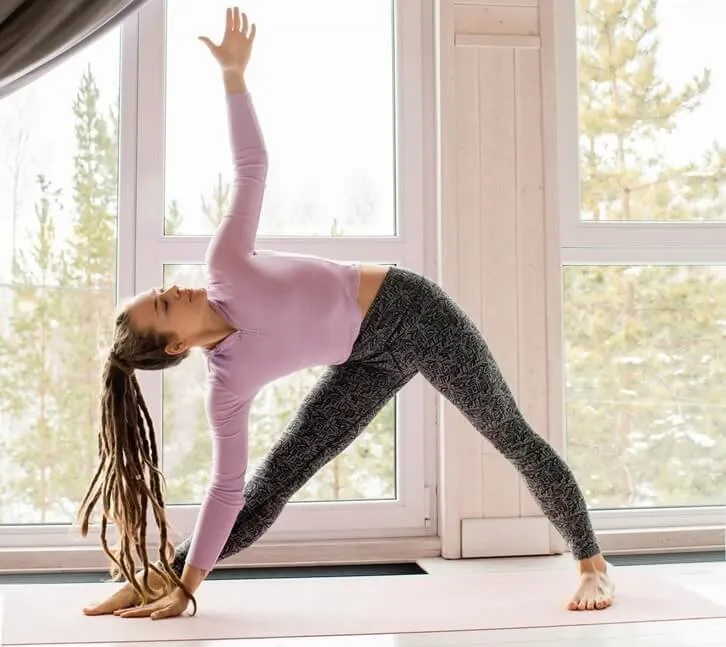
Triangle Pose
A wide-legged standing pose that stretches and strengthens along the whole side body.
- Step your feet wide, turn your right foot out
- Reach forward over your front leg, then lower your right hand to your shin or a block
- Extend your left arm toward the sky
- Open your chest and gaze upward if comfortable
- Rise up and repeat on the other side
Why it helps: Tones the legs, opens the hips and chest, and builds balance and steadiness. A great way to feel long and strong at the same time.
Start Your Free TrialThe Benefits ofYoga
A regular practice supports your goals from several angles at once — body, breath, and mind.
- Builds StrengthStanding and core poses build lean, functional strength that supports everyday movement and activity.
- Keeps You ActiveActive styles like Vinyasa keep you moving and raise your heart rate, helping you stay consistently active.
- Eases Everyday StressBreath-led, slower practice is designed to help calm the mind after a demanding day.
- Grows Body AwarenessMindful movement may help you notice genuine hunger and eat with a little more intention.
- Improves FlexibilityRegular stretching lengthens tight muscles and eases stiffness that can make exercise feel daunting.
- Supports Restful SleepA calming evening practice may help you wind down for better rest, which many people find helps with appetite.
- Better BalanceStanding and single-leg poses build stability and coordination you will feel in daily life.
- A Habit That LastsBecause it feels good and adapts to you, yoga is a practice many people happily keep up long term.
Common Mistakes to Avoid
A few small tweaks can help you enjoy your practice more and stick with it — which is where the real change lives.
Only doing gentle yoga and expecting fast changes on the scale
Blend active styles (Vinyasa, Sun Salutations) with a couple of calmer, restorative sessions each week. Both play a part.
Skipping the breathing because it feels unimportant
Breathwork is a core part of the practice — it is what helps steady the mind and ease everyday stress. Give it the same attention as the poses.
Expecting results in a week or two, then giving up
Yoga tends to work gradually. Many people notice more energy and calm first, with other changes building over weeks. Consistency matters more than speed.
Treating yoga as a free pass to eat anything
Yoga complements balanced eating rather than cancelling it out. The mindfulness you build on the mat can carry over to your plate.
Comparing yourself to others in class or online
Every body is different. Focus on your own signals — energy, sleep, mood, and how you feel — not someone else highlight reel.
Going long and hard, then burning out
A steady 15 to 20 minutes most days is easier to keep up than the occasional marathon session. Small and regular wins.
Practicing Yoga for Weight Loss Safely
Yoga should feel good and energizing, never harmful. A few simple guidelines keep your practice safe and sustainable.
Do
- Start with beginner-friendly classes if you are new to movement
- Warm up before more active flows like Sun Salutations
- Move at your own pace and rest whenever you need to
- Stay hydrated before, during, and after practice
- Tell your instructor about any injuries, health conditions, or pregnancy
- Pair yoga with balanced, nourishing meals as part of an overall healthy lifestyle
Avoid
- Hot yoga if you have heart or blood-pressure concerns
- Very restrictive eating combined with an intense practice
- Pushing into sharp pain — ease off and modify instead
- Intense core work in the early weeks after childbirth
- A competitive mindset — this is your own journey
- Practicing on a full stomach; wait a couple of hours after a big meal
Key takeaways
- Yoga may support weight management by keeping you active, building lean muscle, and encouraging a calmer, more mindful relationship with food.
- Active styles like Sun Salutations and standing flows ask the most of your body, while gentle, restorative yoga helps you unwind after a long day.
- It works best as one supportive piece of a balanced lifestyle — alongside nourishing food and everyday movement — rather than a quick fix.
- Aim for around 20 to 30 minutes on most days, building gradually from easy sessions to more active ones.
- If you are pregnant, living with joint concerns, or managing a health condition, check with your doctor before you begin.
Explore Yoga for Related Goals

Yoga for Anxiety & Stress
Calming, beginner-friendly yoga and breathwork that may help ease anxiety and everyday stress. Simple poses plus live, expert-guided classes.
Yoga for Back
Ease back tension and stiffness with gentle, beginner-friendly yoga. Simple poses, supportive core work, and live online classes with certified instructors.
Breathing Exercises for Relaxation
Five simple breathing exercises that may help you feel calmer and more settled. Step-by-step guidance and live, expert-led classes for beginners.
Learn More from Our Journal
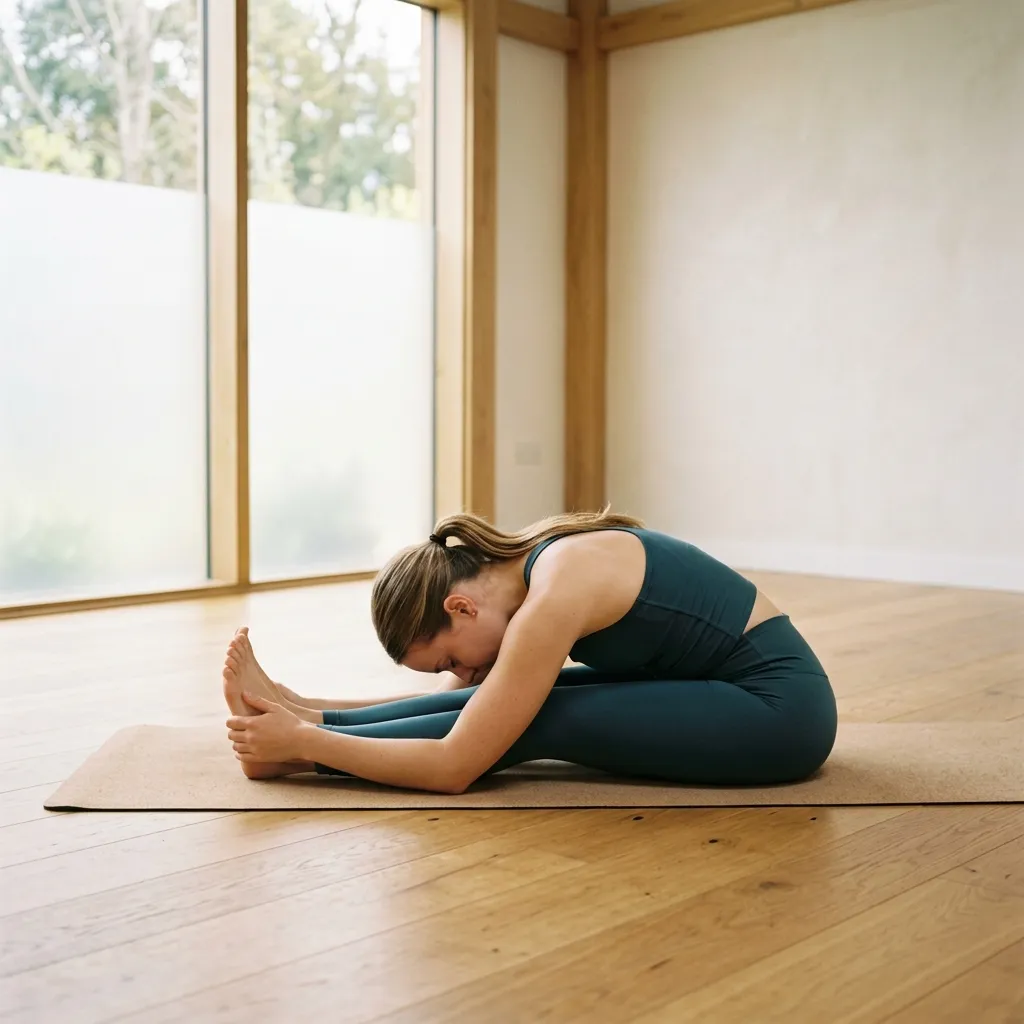
How Long Does It Take to Get Flexible?
A realistic look at how flexibility changes with regular yoga, why consistency matters more than intensity, and what to expect week by week.
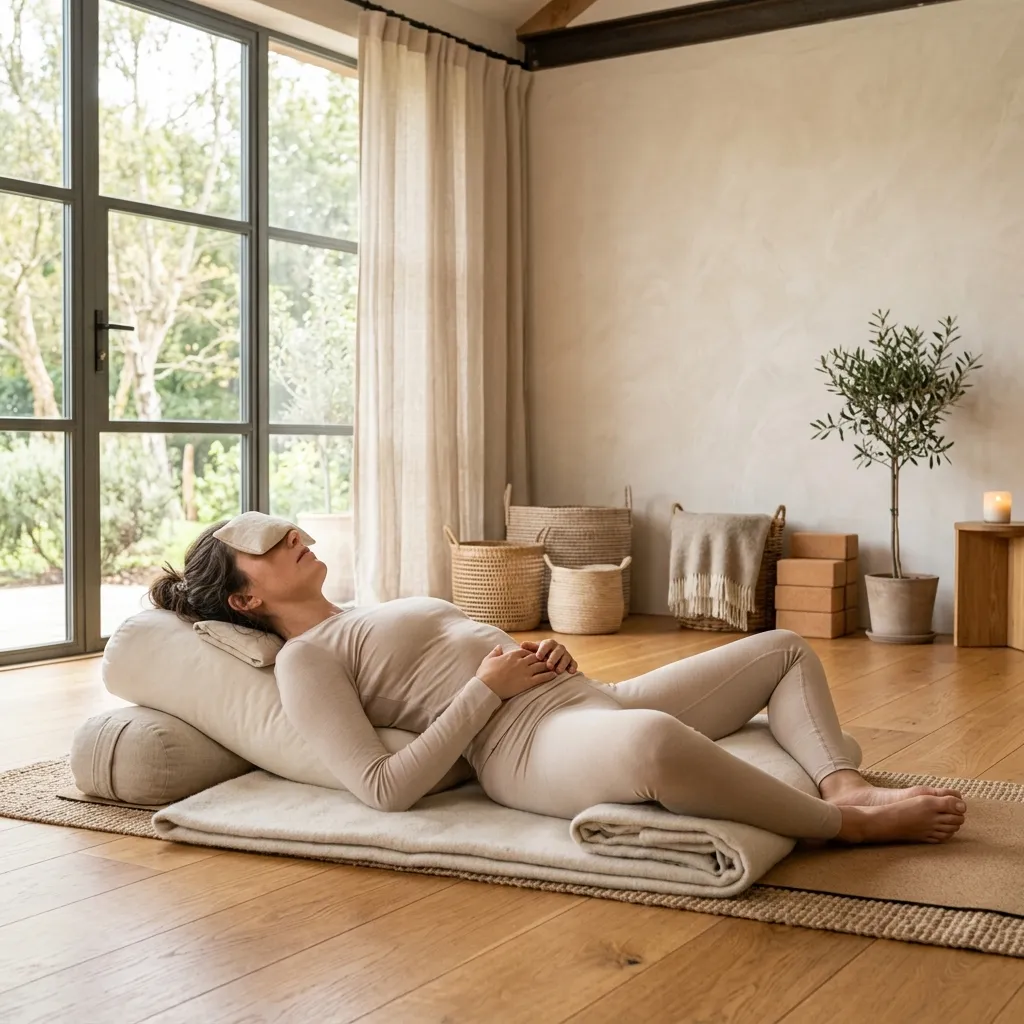
Can Yoga Help You Sleep Better?
Why a slow evening practice may help you wind down, which poses suit bedtime, and the ones to save for daytime. A practical guide you can try tonight.
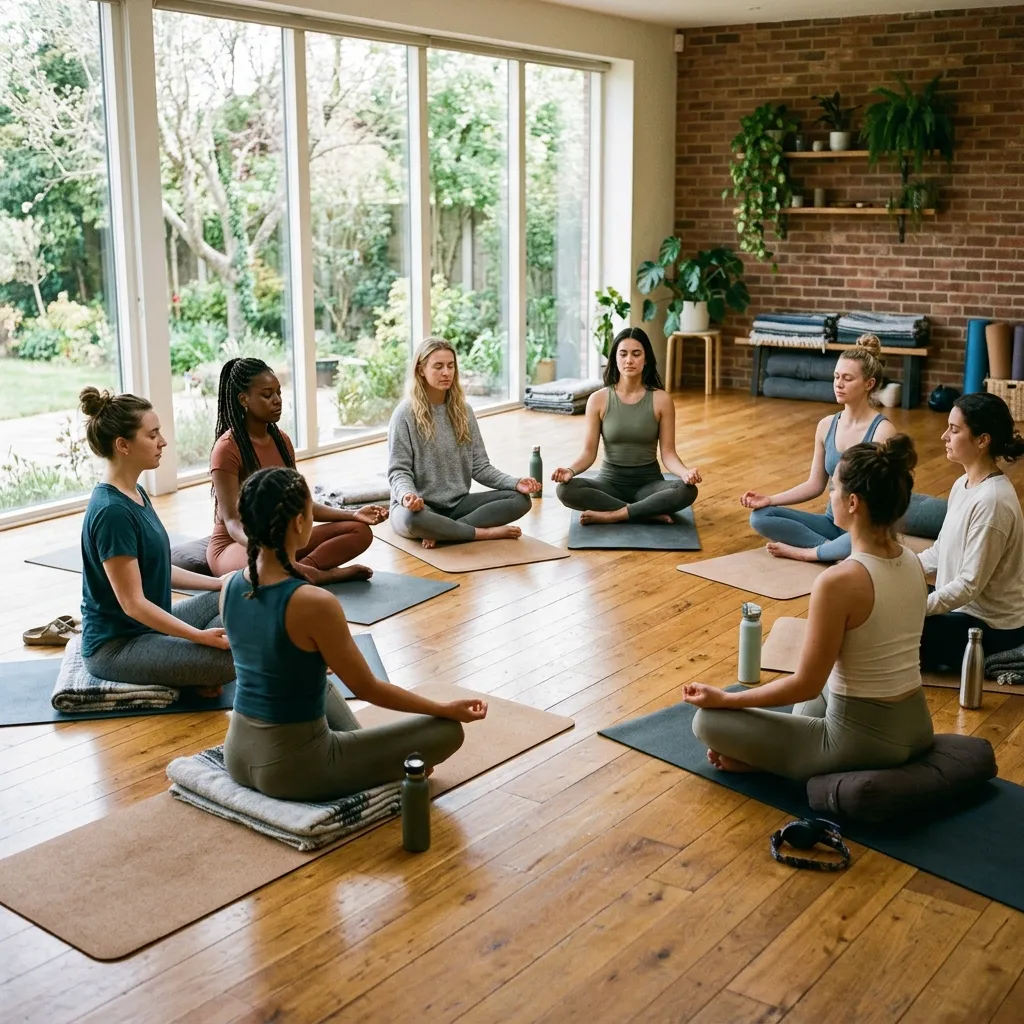
Meditation Techniques for Falling Asleep
Four meditation techniques you can do in bed, why they suit a busy mind at night, and how to build a wind-down that actually sticks.
Questions About Yoga for Weight Loss
Can yoga really help with weight loss?
Many people find yoga a helpful part of their weight management journey. Active styles keep you moving and build strength, while the mindfulness and breathwork can help ease stress and support a calmer relationship with food. It works best as one piece of a balanced lifestyle, alongside nourishing meals and everyday movement.
Which style of yoga is best for weight loss?
More active styles like Vinyasa, Power Yoga, and Sun Salutation flows keep you moving the most. Many people like to balance these with a slower, restorative session or two each week to help unwind and recover.
How often should I practice?
Aiming for around 20 to 30 minutes most days of the week is a lovely goal. Consistency matters more than length — even a short daily practice can add up when you keep it up.
How soon might I notice a difference?
Everyone is different. Many people first notice more energy, better sleep, and a calmer mood within a few weeks, with other changes building gradually over a couple of months of regular practice.
I am a complete beginner — is that okay?
Absolutely. Beginner-friendly classes are designed exactly for this. Our instructors offer modifications for every pose, so you can start slowly and build confidence at your own pace.
Do I need to be flexible to start?
Not at all. Flexibility develops with practice — it is not a requirement to begin. You start exactly where you are today.
Can yoga help with stress-related eating?
Many people find that the mindfulness and breathwork in yoga help them notice the difference between genuine hunger and stress or boredom. Over time, that awareness can support more intentional eating.
Is yoga enough on its own for weight management?
Yoga is a wonderful, supportive piece of the picture. It tends to work best alongside balanced, nourishing meals and everyday movement, plus guidance from your healthcare provider where needed.
Can I practice yoga at home?
Yes. All you really need is a mat and a little space. Our live online classes bring a certified instructor right into your living room, with real-time guidance.
Ready to Build a Practice That Lasts?
Book a friendly, no-pressure consultation with YogShri. We will get to know your goals and lifestyle and help you find a practice that fits — and grows with you.