
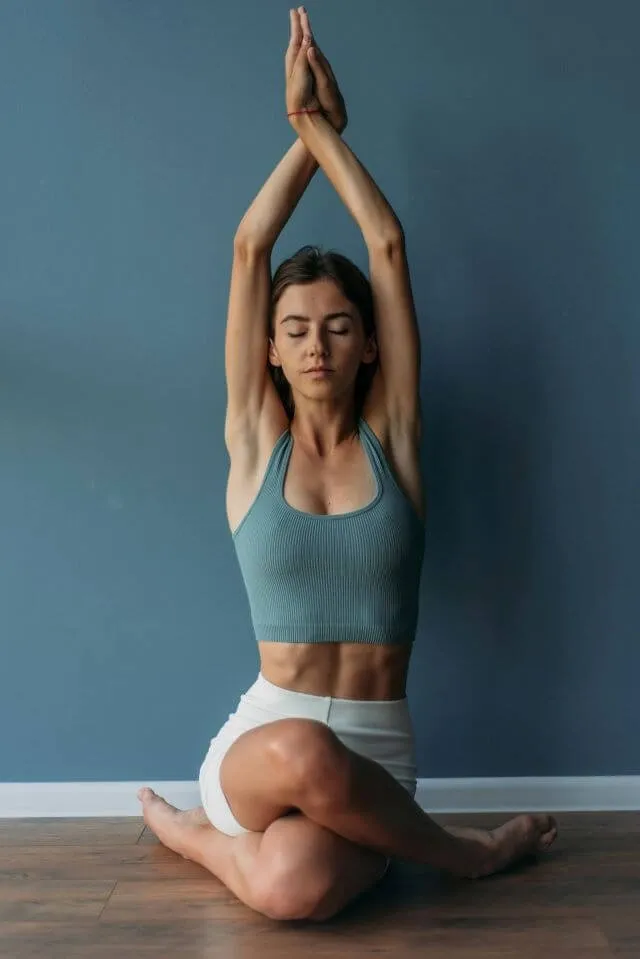
Yoga for a Stiff Neck
Live, expert-guided classes that loosen neck and shoulder tension, improve mobility, and build steadier posture habits — from home.
Can Yoga Help with a Stiff Neck?
Yes. At YogShri, live guided classes may help ease neck, shoulder, and upper-back tightness, while breathwork and posture awareness support lasting comfort. Results vary.
- Eases Tightness
- Slow stretches help loosen tension in the neck and shoulders
- Improves Mobility
- Movement helps the neck and upper back move more freely
- Better Posture
- Awareness helps counter the screen-time slouch that strains the neck
- Calms Tension
- Breathwork helps release the stress many people hold in the neck
Why Students Choose YogShri
Our live classes give you personal attention from certified instructors who can see you and guide your form in real time.
Small groups of 10 to 15 for real focus
You are never just a tile on a screen. Smaller classes mean your instructor can guide your alignment and adapt poses to suit you.
100+ live classes, morning to night
Join a session that fits your day — early morning, lunch break, or evening. Every class is live and interactive, never pre-recorded.
Real-time form correction and feedback
Get clear, practical cues to refine each pose, plus a warm community of students and teachers cheering you on.
A program shaped around you
We start with a one-on-one chat about your goals, screen habits, and any limitations, then design a practice that grows with you.
Who Can Benefit from Yoga for a Stiff Neck?
You do not need to be flexible or experienced to start. Our instructors tailor every session to your body and to where you are beginning from.
Desk & Screen Workers
Long hours at a laptop often leave the neck and shoulders tight and achy by the end of the day.
Phone & Laptop Users
Hours of looking down at devices — sometimes called tech neck — can quietly build up tension.
Anyone Carrying Stress
When stressful stretches hit, many people feel it settle straight into their neck and shoulders.
Complete Beginners
No experience needed. Beginner-friendly movement with a modification for every pose.
Anyone Who Wakes Up Stiff
If an awkward sleeping position leaves your neck cricked in the morning, slow movement can help you loosen up.
Seniors
Low-impact mobility work helps keep the neck and shoulders moving comfortably with age.
Gentle Yoga Poses for a Stiff Neck
These five gentle poses focus on the neck, shoulders, and upper back — the areas that tighten most during long hours at a desk. Move slowly, stay within a comfortable range, and let your breath lead. Hold each for 5 to 8 easy breaths.
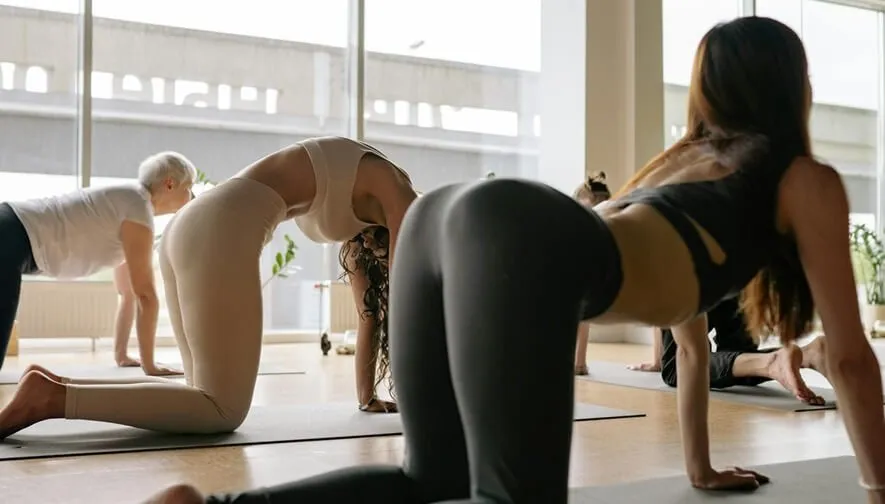
Cat-Cow
A slow, flowing movement that brings gentle motion through the whole spine, including the neck.
- Come onto your hands and knees, wrists under shoulders
- Inhale, drop your belly, lift your chest and gaze softly forward (Cow)
- Exhale, round your back and let your head release down (Cat)
- Move slowly with your breath, keeping the neck long and relaxed
- Repeat for 6 to 8 slow rounds
Why it helps: May help loosen a stiff spine and neck first thing in the morning, encouraging smoother, more comfortable movement.
Start Your Free Trial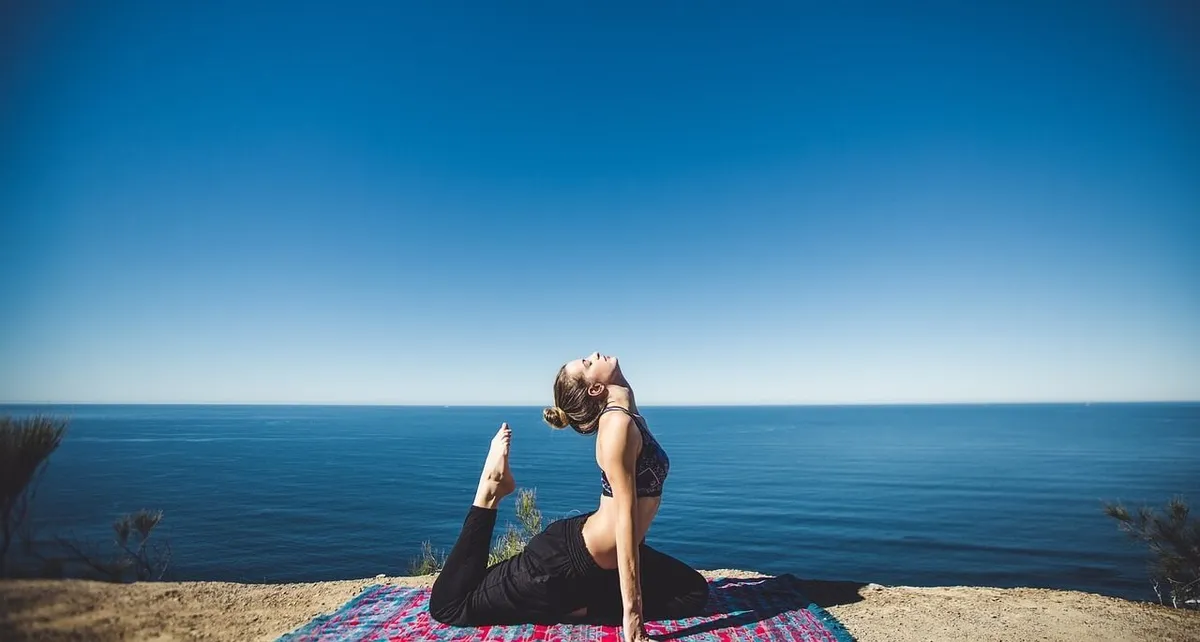
Seated Neck Release
A simple seated side stretch that brings gentle length to the sides of the neck.
- Sit tall with your shoulders relaxed down and back
- Slowly lower your right ear toward your right shoulder
- Let the weight of your head do the work — never pull with your hand
- Feel your left shoulder soften away and breathe slowly
- Return to centre on an inhale and repeat on the other side
Why it helps: May help ease tightness along the side of the neck and upper shoulders — the spot that stiffens after hours at a screen.
Start Your Free Trial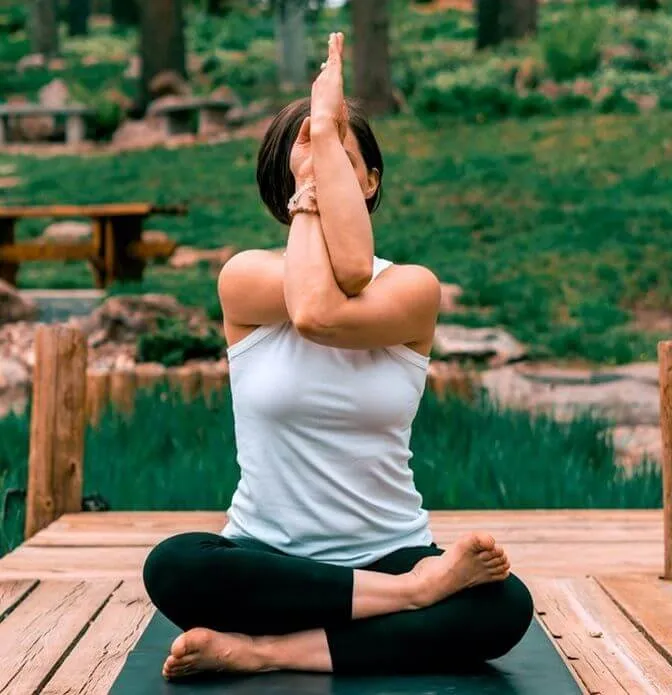
Eagle Arms
A simple seated stretch that spreads and opens the upper back and shoulders.
- Sit or stand tall
- Stretch your arms forward, then cross the right arm under the left
- Bend the elbows and wrap the forearms, bringing the palms toward touching
- Lift the elbows slightly and draw them away from your face
- Breathe into your upper back, then release and swap sides
Why it helps: May help create space between the shoulder blades, easing the tightness that gathers there and pulls on the neck.
Start Your Free Trial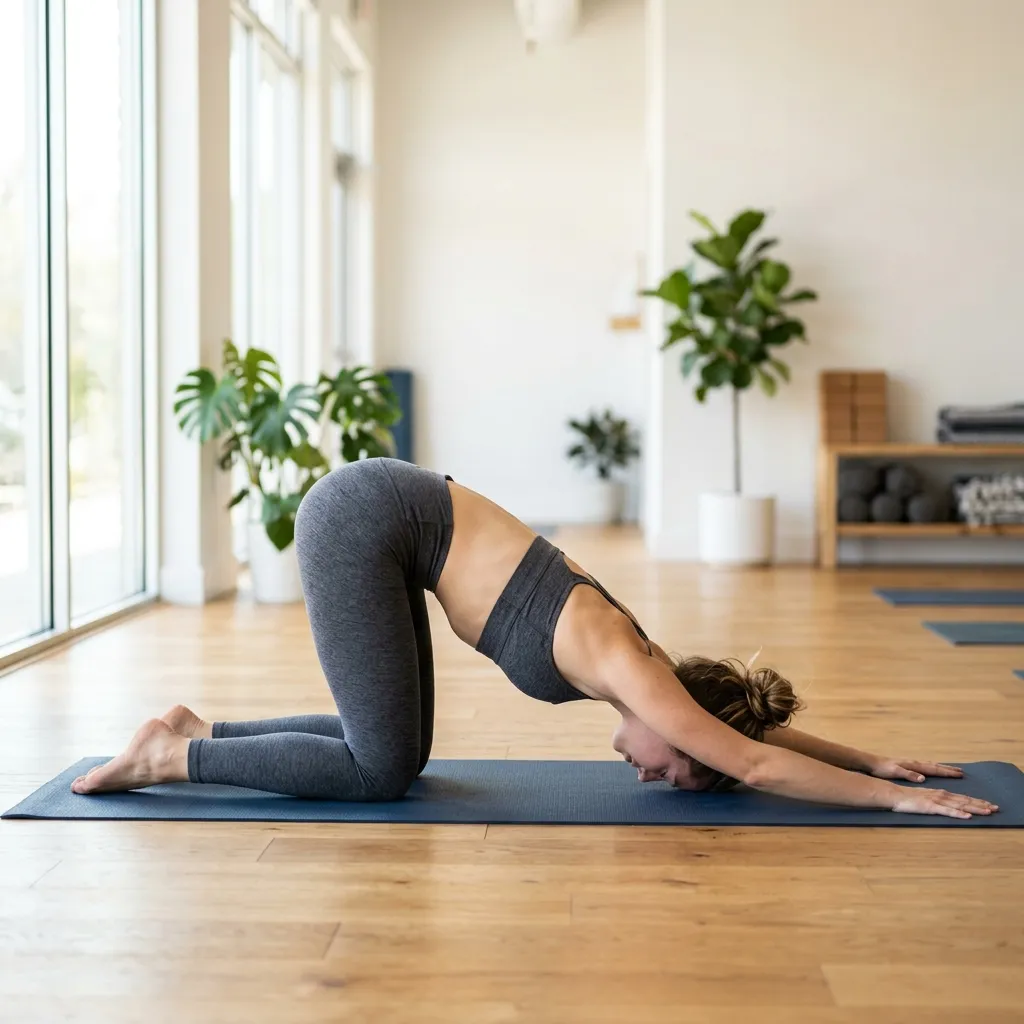
Extended Puppy Pose
A gentle half forward fold that opens the shoulders and lengthens the upper back.
- Start on hands and knees with your hips stacked over your knees
- Walk your hands forward and lower your chest toward the mat
- Keep the hips high and rest your forehead on the mat or a cushion
- Let your neck stay completely relaxed — no lifting or turning
- Breathe slowly, then walk your hands back to release
Why it helps: May help open tight shoulders and the upper back while the neck stays fully supported and soft.
Start Your Free Trial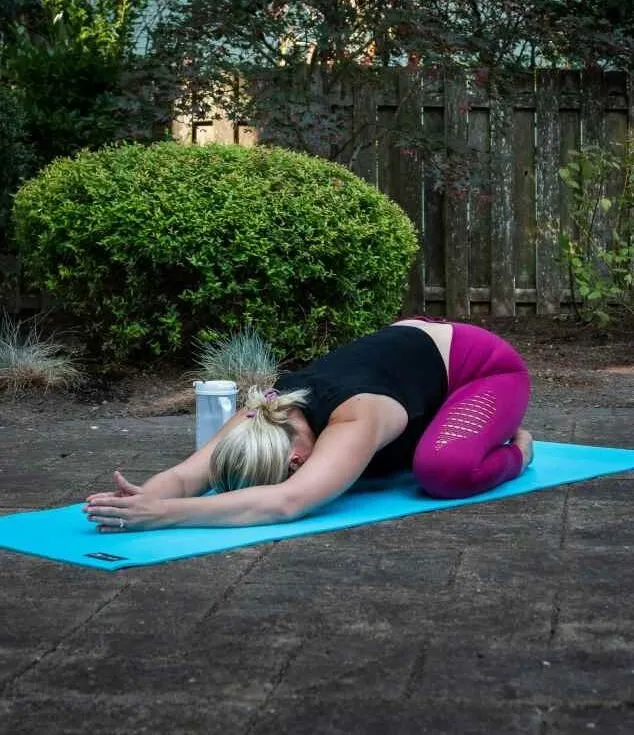
Child's Pose
A soothing resting pose that lets the neck, shoulders, and back fully relax.
- Kneel and sit back toward your heels
- Fold forward and rest your forehead on the mat or a cushion
- Let your arms rest forward or alongside your body
- Allow your neck and shoulders to go completely soft
- Breathe slowly for a minute or two
Why it helps: Offers a calm place to let the neck and shoulders soften and settle your breath — a lovely way to finish.
Start Your Free TrialThe Benefits ofYoga
A regular practice supports your neck and shoulders from several angles at once — body, breath, and mind.
- Eases TensionSlow, breath-led stretches help loosen the tightness that gathers in the neck and shoulders.
- Improves MobilitySlow, steady movement encourages the neck and upper back to move more freely and comfortably.
- Supports Better PostureBuilds the awareness that helps you sit and stand taller through long screen-time days.
- Builds Supportive StrengthKind, supportive movement helps the muscles around the neck and shoulders feel steadier.
- Improves FlexibilityRegular stretching gradually eases stiffness across the shoulders and upper back.
- Calms Everyday StressBreathwork and mindful movement help release the stress many of us hold in the neck.
- Supports Restful SleepA calming evening practice may help you unwind, which many people find eases next-day tightness.
- Grows Body AwarenessHelps you notice tension early and soften it before it builds up.
Common Mistakes to Avoid
A few simple adjustments keep your practice safe and comfortable — which is what helps you stick with it.
Forcing the stretch or cranking the neck to go deeper
Never force it. Move slowly within a small, comfortable range and let the tension release on its own over time.
Doing fast, full neck circles
Skip fast circles, especially rolling the head all the way back. Favour slow, controlled tilts and turns instead.
Holding your breath during a stretch
Keep breathing softly and steadily. Your breath helps the muscles around the neck relax.
Only stretching and ignoring your setup
Pair your practice with a screen at eye level and regular movement breaks — posture habits matter as much as the poses.
Pushing through sharp or shooting pain
Easy stretching is fine; sharp, shooting, or radiating pain is a stop sign. Ease off and check with a professional if it persists.
Practicing only once in a while
A few minutes most days does far more than an occasional long session. Little and often wins for the neck.
Practicing Neck Yoga Safely
This is general wellness guidance, not medical advice. If your neck pain is severe, followed an injury, or comes with numbness, tingling, dizziness, or pain spreading into the arms, please see a healthcare professional before practicing.
Do
- Ease in and move slowly, within a pain-free range
- Keep the neck long and the shoulders relaxed
- Breathe softly and steadily through each stretch
- Sit on a cushion or use support to help you sit tall
- Tell your instructor about any neck concerns before class
- Set your screen at eye level and take regular movement breaks
Avoid
- Fast or forceful neck circles, especially rolling the head back
- Deep, compressive poses like full shoulderstand or headstand if the neck is stiff
- Pushing into sharp, shooting, or radiating pain
- Heavy backbends that crunch or jam the back of the neck
- Holding your breath or gripping the shoulders
- Practicing right after an injury or when very fatigued
Key takeaways
- Gentle yoga may help ease tension and stiffness through the neck, shoulders, and upper back, with results varying from person to person.
- Slow movements like Cat-Cow, shoulder openers, easy twists, and Child's Pose are the friendliest place to start.
- Much neck stiffness builds up from screens and stress, so posture awareness and movement breaks matter as much as the poses.
- A few minutes most days works better than the occasional long session — little and often is the goal.
- Keep every movement slow and pain-free, and check with a doctor first if pain is severe, follows an injury, or includes numbness or tingling.
Explore Yoga for Related Areas
Yoga for Anxiety & Stress
Calming, beginner-friendly yoga and breathwork that may help ease anxiety and everyday stress. Simple poses plus live, expert-guided classes.
Yoga for Back
Ease back tension and stiffness with gentle, beginner-friendly yoga. Simple poses, supportive core work, and live online classes with certified instructors.
Breathing Exercises for Relaxation
Five simple breathing exercises that may help you feel calmer and more settled. Step-by-step guidance and live, expert-led classes for beginners.
Learn More from Our Journal
How Long Does It Take to Get Flexible?
A realistic look at how flexibility changes with regular yoga, why consistency matters more than intensity, and what to expect week by week.
Can Yoga Help You Sleep Better?
Why a slow evening practice may help you wind down, which poses suit bedtime, and the ones to save for daytime. A practical guide you can try tonight.
Meditation Techniques for Falling Asleep
Four meditation techniques you can do in bed, why they suit a busy mind at night, and how to build a wind-down that actually sticks.
Questions About Yoga for a Stiff Neck
Can yoga help with a stiff neck?
Many people find that yoga helps ease tightness through the neck, shoulders, and upper back. Slow, mindful stretches and breathwork encourage the area to relax, and over time the practice can support steadier posture habits. It works best as part of a balanced routine, and results vary from person to person.
Which yoga poses are good for a stiff neck?
Popular options like Cat-Cow, Cow Face arms, Eagle arms, seated and reclined twists, and Child's Pose are commonly used to ease tension in the neck, shoulders, and upper back. Move slowly and stay within a comfortable range.
How often should I practice?
A few minutes on most days tends to help more than one long session now and then. Even 5 to 10 minutes of easy neck and shoulder movement daily can make a difference over time.
Is yoga safe if my neck is very stiff or sensitive?
Go slowly and keep every movement slow and pain-free. Skip fast neck circles and deep compressive poses. If your neck pain is severe, followed an injury, or comes with numbness, tingling, or pain spreading into the arms, please check with a healthcare professional first.
Can yoga help with tech neck from phones and laptops?
Much neck stiffness builds up from looking down at screens. Slow, mindful yoga helps loosen that tightness, and the posture awareness you build on the mat can carry over to how you sit and hold your devices.
I am a beginner and not flexible — can I still do this?
Definitely. These practices are easy and beginner-friendly, and our instructors offer a modification for every pose. Flexibility develops with time; you start exactly where you are today.
How soon might I notice a difference?
Everyone is different. Many people feel a little looser after a single easy session, with more lasting ease building gradually over a few weeks of regular practice.
Can I do these stretches at my desk?
Many of them, yes. Seated neck and shoulder movements and easy twists work well as short breaks during the workday to keep the area from tightening up.
Ready to Help Your Neck Feel Looser?
Book a friendly, no-pressure consultation with YogShri. We will get to know your routine, screen habits, and goals, then help you build a practice that fits your day.