
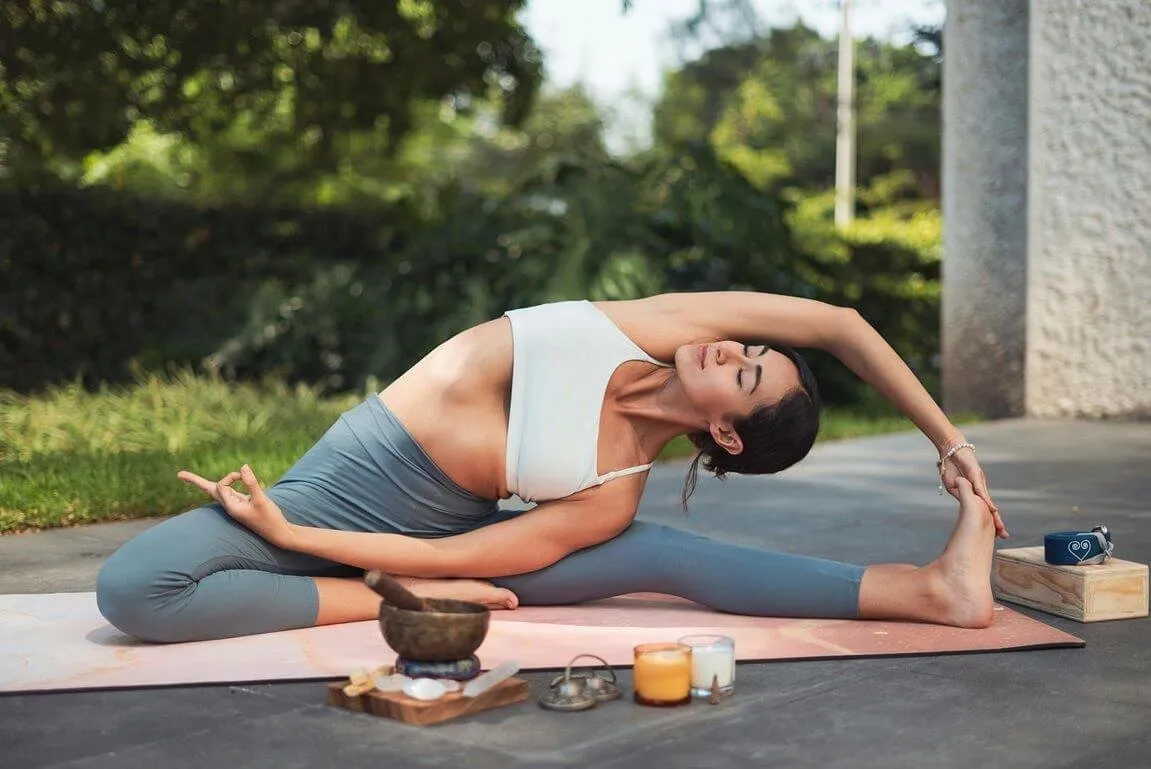
Yoga for the Lower Back
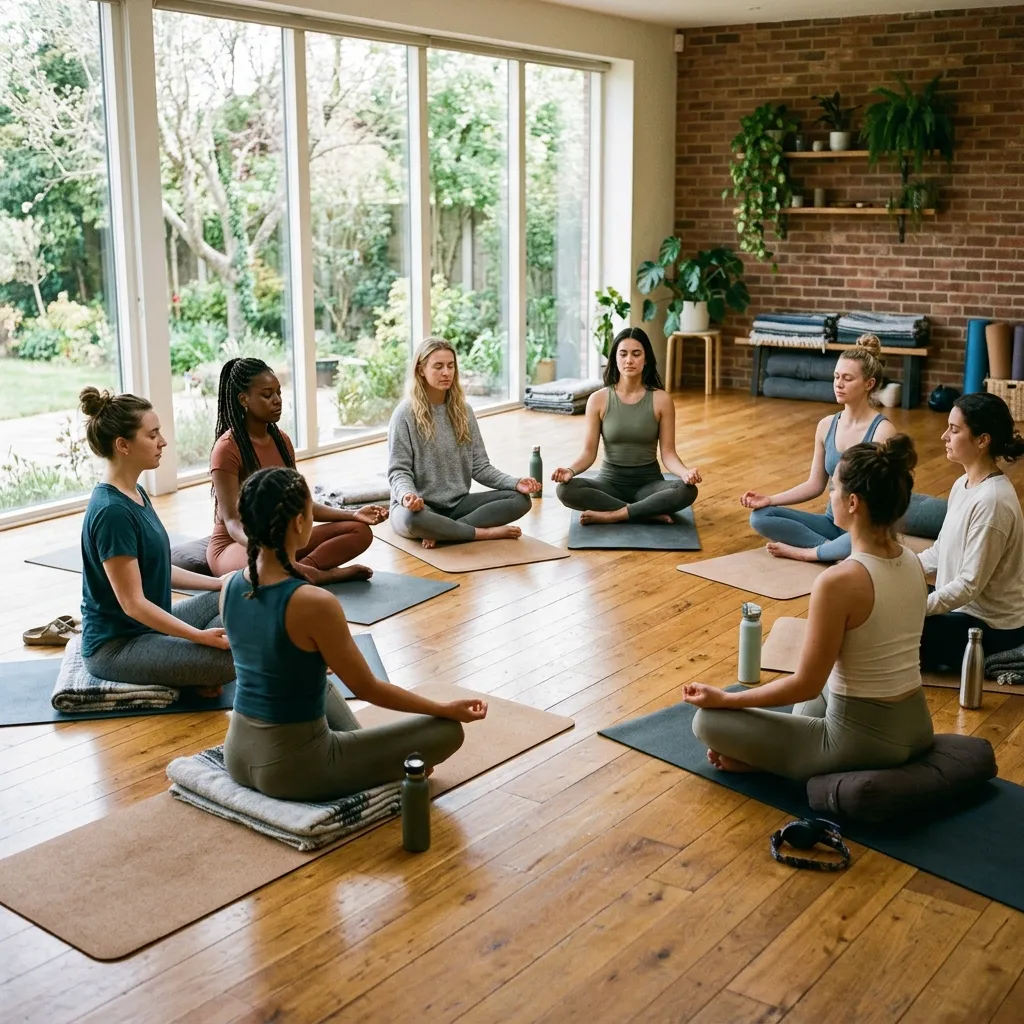
Instructor-guided live classes with mindful movement to support lower-back mobility, flexibility, and relaxation — from home.
Can Yoga Support a Healthy Lower Back?
Yes. At YogShri, live guided classes may help improve flexibility in the hips and spine, build supportive core strength, and encourage comfortable movement. Results vary.
- Improves Flexibility
- Stretching helps loosen tight hips and hamstrings that pull on the back
- Builds Support
- Core and back strengthening helps steady the lower spine
- Better Posture
- Awareness supports more comfortable everyday alignment
- Relieves Tension
- Breath-led movement helps ease stress and stiffness
Why Students Choose YogShri
Our live classes give you personal attention from certified instructors who can see you and guide your form in real time.
Small groups of 10–15 for individual focus
Start with our easy foundational classes, then move to beginner or intermediate levels at your own pace as you build confidence.
100+ live classes with round-the-clock access
Join a class that fits your schedule — morning, afternoon, or evening. Every session is live and interactive, never pre-recorded.
Live posture guidance and friendly feedback
Get real-time guidance to refine your poses and join a supportive community of students and teachers.
Personalized program design
We start with a friendly chat about your comfort level, mobility, and goals, then design a yoga plan tailored to your body and adjust it as you progress.
Who Can Benefit from Yoga for the Lower Back?
Yoga for the lower back can suit a wide range of people. Our certified instructors tailor every session to your comfort level, mobility, and goals — with modifications for beginners.
Office Workers & Desk Professionals
Long hours of sitting can leave the lower back and hips feeling tight. Slow movement helps you feel more mobile through the day.
Seniors (60+)
Low-impact yoga supports mobility, balance, and comfortable everyday movement without high-impact stress.
People Who Stand All Day
Hours on your feet can leave the lower back feeling tired. Slow, supported poses help you unwind and relax.
Frequent Travellers
Long flights and drives can leave the back feeling stiff. Simple stretches help you move more freely again.
New & Busy Parents
Lifting and carrying can tire the lower back. Slow, modified movement supports everyday comfort.
Complete Beginners
No experience needed. Our instructors offer modifications and props to make every pose accessible.
Gentle Yoga Poses for the Lower Back
These five poses are popular for supporting lower-back mobility and comfort. Move slowly, stay within a comfortable range, and hold each for 5–8 breaths.
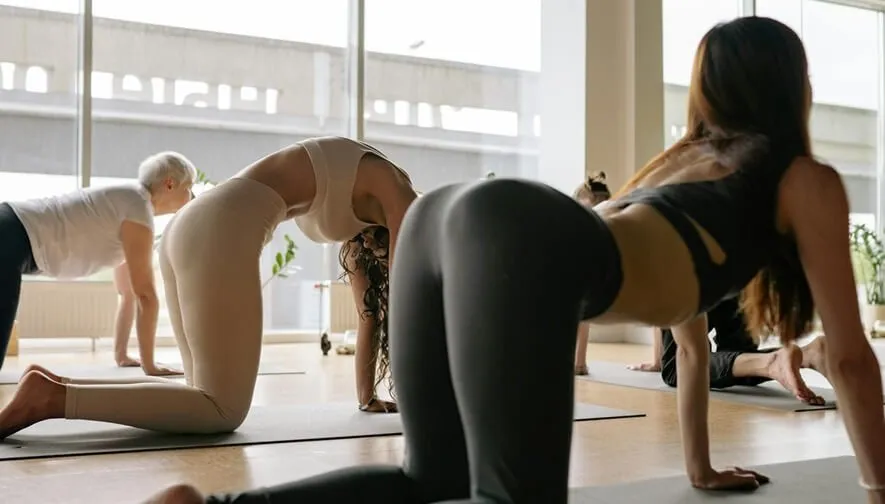
Cat–Cow
A slow, breath-led flow that mobilizes the whole spine — a comfortable way to begin.
- Start on hands and knees, wrists under shoulders and knees under hips
- Inhale, slowly drop the belly and lift the chest and tailbone (Cow)
- Exhale, slowly round the spine and tuck the chin (Cat)
- Flow slowly with your breath for 5–8 rounds
Why it helps: A slow, flowing movement that warms up the spine and encourages easy mobility through the lower back.
Start Your Free Trial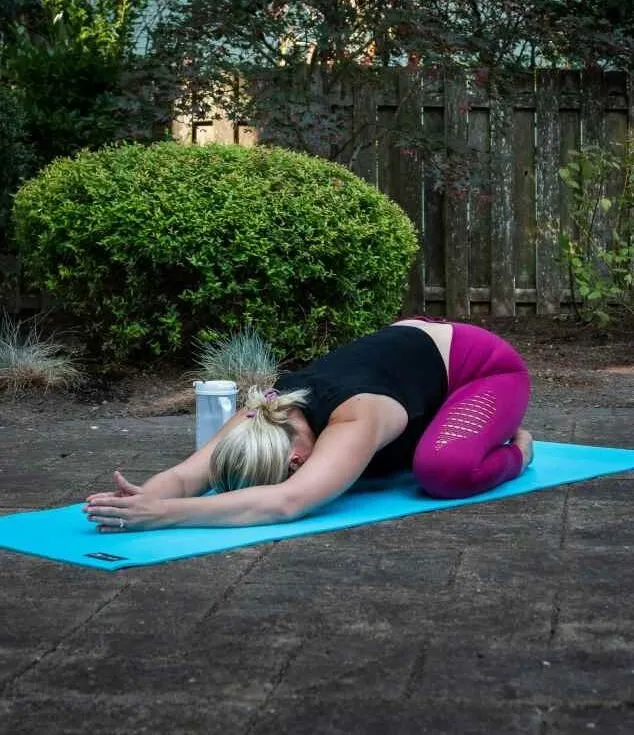
Child's Pose
A calming resting pose that eases the lower back and invites the body to soften.
- From hands and knees, bring your big toes together and knees wide
- Sit your hips back toward your heels
- Walk your hands forward and rest your forehead on the mat
- Breathe softly and stay for 5–8 breaths or longer
Why it helps: A restful pose that eases the lower back and hips and encourages relaxation.
Start Your Free Trial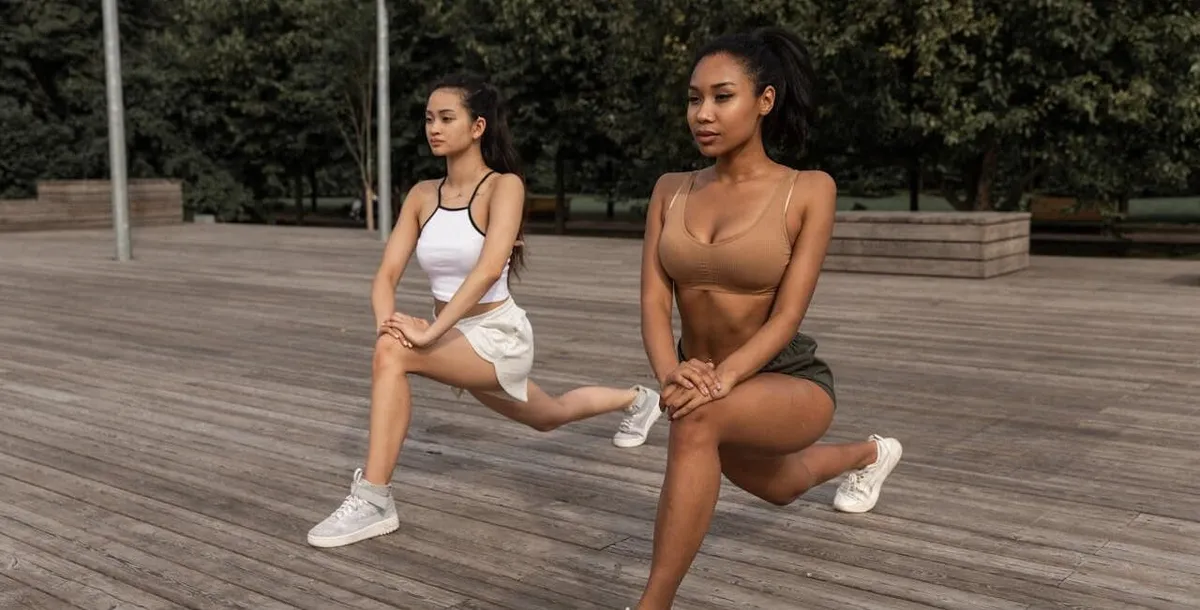
Knees-to-Chest
A soothing supine pose that eases the lower back and hips.
- Lie on your back and slowly hug both knees toward your chest
- Keep your shoulders and head relaxed on the mat
- Optionally rock slowly side to side
- Hold for 5–8 breaths, breathing into the lower back
Why it helps: A slow movement that may help ease everyday tightness in the lower back and hips.
Start Your Free Trial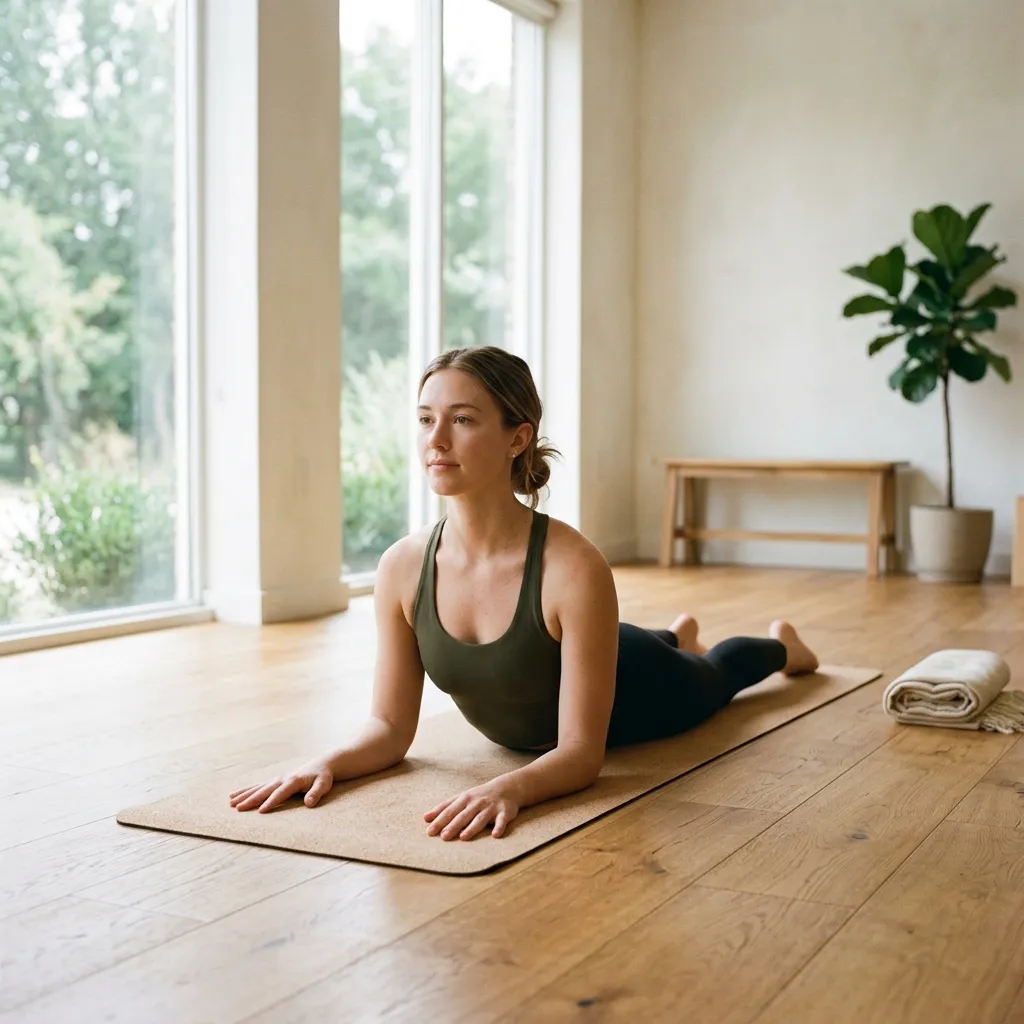
Sphinx Pose
A mild, well-supported extension that softly opens the front of the body.
- Lie on your belly with legs extended and elbows under the shoulders
- Slowly press the forearms down and lift the chest
- Keep the shoulders relaxed and the gaze forward and down
- Hold for 5–8 breaths, then lower down slowly
Why it helps: A supported, soft backbend that encourages a natural curve in the lower spine and helps counter long hours of sitting.
Start Your Free Trial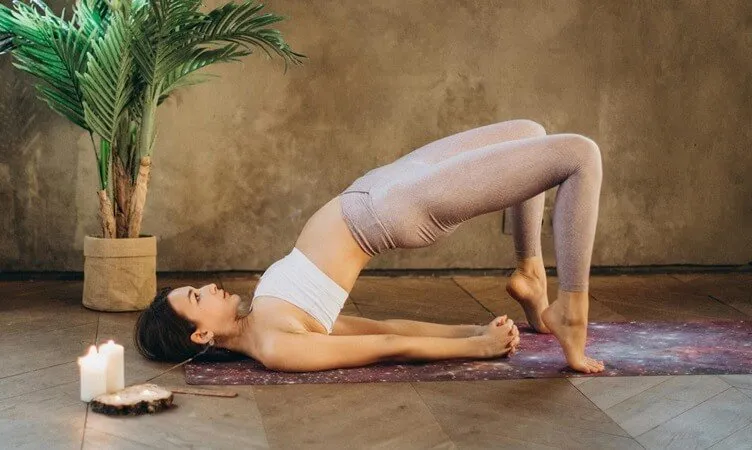
Bridge Pose
A steady strengthener for the back of the body that supports a stable, comfortable lower back.
- Lie on your back, knees bent, feet hip-width and flat on the mat
- Press through your feet and lift the hips to a comfortable height
- Keep the neck relaxed and breathe steadily
- Hold for 5 breaths, then lower down slowly, one vertebra at a time
Why it helps: Steadily builds supportive strength in the glutes, hamstrings, and core that helps the lower back feel steady.
Start Your Free TrialThe Benefits ofYoga
A consistent practice offers several connected benefits that support a comfortable, mobile lower back and overall well-being.
- Improves FlexibilityRegular stretching helps lengthen tight muscles and supports range of motion in the hips, spine, and hamstrings.
- Supports CirculationMindful movement and breathing support healthy blood flow throughout the body.
- Builds Supportive StrengthSupportive poses help build strength in the core, glutes, and back that supports the lower spine.
- Better BalanceStanding and core-focused poses support steadiness and body awareness.
- Eases StiffnessSlow movement helps the joints and back feel less stiff, especially after sitting.
- Supports Rest & RenewalRestorative poses and breath encourage relaxation and calm after activity.
- Enhances MobilityHip openers and spinal movements support freer, more comfortable movement.
- Supports Stress ReliefCombining movement, breath, and mindfulness supports relaxation and eases everyday tension.
Common Mistakes to Avoid in Lower-Back Yoga
Avoid these common errors to get the most from your practice and stay comfortable.
Pushing through sharp pain, thinking more intensity means faster progress
Stop if you feel sharp, shooting, or stabbing sensations. Mild stretching sensations are normal — sharp pain is not. Ease off and use a modification.
Skipping the warm-up and jumping straight into deep stretches
Start with a few minutes of easy breathing and movement like Cat–Cow. Cold muscles feel less comfortable and are easier to strain.
Rounding the lower back in forward folds
Hinge from the hips and keep a long spine. Bend the knees generously so the movement comes from the hips, not a rounded lower back.
Comparing yourself to others or trying to match the instructor exactly
Every body is different. Use props and modifications that suit your current range of motion.
Holding your breath during challenging poses
Keep a steady, even breath throughout every pose. Breath-holding adds tension.
Ignoring your body's signals and practicing when something feels off
Rest is part of the practice. If a pose consistently feels uncomfortable, skip it and ask your instructor for an easier alternative.
Practicing Lower-Back Yoga Safely
This is general wellness guidance rather than medical advice. Gentle yoga suits most people and works best alongside your healthcare provider's guidance - please check with them first if you have an ongoing back concern, a diagnosed condition, or you are pregnant.
Do
- Start with beginner-level, slow classes and move slowly
- Use props like blocks, straps, and bolsters to support your body
- Let your instructor know how you are feeling before class
- Practice on a non-slip mat on a flat, even surface
- Move within a comfortable range and rest in Child's Pose whenever you need to
- Warm up slowly before any deeper stretch
Avoid
- Deep forward folds with a rounded lower back
- Intense or forced backbends that create discomfort
- High-impact or hot yoga styles when your back feels sensitive
- Twisting or bending aggressively beyond a comfortable range
- Any pose that creates sharp or radiating sensations
- Practicing right after a heavy meal or when very fatigued
Key takeaways
- Gentle yoga may help improve flexibility in the hips and hamstrings, build supportive core strength, and encourage easier spinal movement. Results vary from person to person.
- Beginner-friendly poses like Cat-Cow, Child's Pose, and a reclined twist are good starting points. Leave deeper backbends until you feel settled and comfortable.
- Practise little and often - 10 to 20 minutes most days tends to serve you better than one long weekly session.
- Yoga works best alongside your healthcare provider's guidance, together with posture awareness and sensible ergonomics at your desk.
- If you have an ongoing back concern, or discomfort that spreads down the leg, please speak with a healthcare professional before you begin.
Explore Yoga for Related Goals

Yoga for Anxiety & Stress
Calming, beginner-friendly yoga and breathwork that may help ease anxiety and everyday stress. Simple poses plus live, expert-guided classes.
Yoga for Back
Ease back tension and stiffness with gentle, beginner-friendly yoga. Simple poses, supportive core work, and live online classes with certified instructors.
Breathing Exercises for Relaxation
Five simple breathing exercises that may help you feel calmer and more settled. Step-by-step guidance and live, expert-led classes for beginners.
Learn More from Our Journal
How Long Does It Take to Get Flexible?
A realistic look at how flexibility changes with regular yoga, why consistency matters more than intensity, and what to expect week by week.
Can Yoga Help You Sleep Better?
Why a slow evening practice may help you wind down, which poses suit bedtime, and the ones to save for daytime. A practical guide you can try tonight.
Meditation Techniques for Falling Asleep
Four meditation techniques you can do in bed, why they suit a busy mind at night, and how to build a wind-down that actually sticks.
Questions About Yoga for the Lower Back
Can yoga help with lower back discomfort?
Yoga is a popular way to support a mobile, comfortable lower back. A mindful practice may help improve flexibility, build supportive strength, and encourage relaxation. Results vary from person to person, and yoga is a complement to — not a replacement for — professional care.
Which yoga poses are good for the lower back?
Popular options include Cat–Cow for spinal mobility, Child's Pose for a soothing release, Knees-to-Chest, Sphinx for a supported extension, and Bridge for supportive strength. Always move within a comfortable range.
Is yoga suitable for beginners with a stiff lower back?
Yes. Beginner-friendly yoga emphasizes slow movement, breath awareness, and modifications with props, which makes it an accessible place to start. Let your instructor know how you are feeling so poses can be adjusted.
How often should I practice yoga for the lower back?
Many people find 3–5 short sessions a week comfortable. Consistency tends to matter more than length — even 10 minutes of easy daily movement can help you feel more mobile over time.
Is yoga suitable for seniors?
Easy, chair, and restorative styles are well-suited to older adults. Our instructors offer modifications and props like chairs, blocks, and straps to keep movement comfortable and accessible.
How soon might I notice a difference?
This varies from person to person. Some people feel a little more limber within a few weeks of consistent practice; others take longer. Yoga supports general well-being rather than promising specific outcomes.
Can I do yoga if I sit at a desk all day?
Yes — yoga is popular with desk workers. Simple stretches and mindful movement can help the lower back and hips feel less stiff after long hours of sitting.
When should I avoid yoga and speak to a doctor first?
Avoid yoga and consult a healthcare professional if you have severe or sudden back discomfort, numbness or tingling, loss of bladder or bowel control, a suspected injury, fever, or discomfort after a fall. Yoga is not a substitute for medical care.
Do I need any experience or equipment?
No experience is needed. A non-slip mat is helpful, and props like a cushion, block, or strap make poses more accessible. Our live classes include beginner-friendly modifications.
Is online yoga as helpful as in person for the lower back?
Live online classes let a certified instructor see you and offer real-time guidance on form and modifications, which many students find supportive and convenient from home.
Sources & Further Reading
- Yoga for Chronic Pain: A Systematic Review and Meta-analysis — Annals of Internal Medicine
- Effects of Yoga on Musculoskeletal Health — International Journal of Yoga
- Yoga as a Complementary Therapy for Chronic Pain — Harvard Health Publishing
- Physical Activity and Exercise for Chronic Pain in Adults — Cochrane Database
- Yoga: What You Need to Know — NCCIH (NIH)
Ready to Feel More Comfortable?
Join a beginner-friendly live class with YogShri. Our certified instructors will guide you through mindful movement designed to support a comfortable, mobile lower back — all from home.